What an Afternoon in Piedmont Teaches You About the Wine
Nothing about the road into La Morra tells you to stop. You’re on a barely two-lane stretch between Barolo and Alba, the hills rolling past, and then there’s a sign for Annunziata, handmade-looking, and your passenger says turn here. So you turn.
Fratelli Ferrero had no tour bus outside, no car park. It had a gate standing open, a cat lounging in the sun, and Jonas, one of two brothers running what their great-grandparents started, greeting us as if we were expected. We weren’t.
We stayed three hours. There was wine, obviously. There was food: cheeses, cured meats, something with hazelnuts I’ve been trying to recreate ever since. There was a terrace above the vines looking out over La Morra, and the kind of conversation that happens when someone is proud of what they make and curious about why you turned in off a road you were only passing through.
We drove away with bottles wrapped in our jackets. That autumn I found a US importer who carries their wine, and I’ve ordered a case every fall since. It’s how we start the holidays.
I’m telling you this not because Fratelli Ferrero is the only reason to go to Piedmont, but because it’s one of the reasons I understand the place now in a way I didn’t before we stopped.
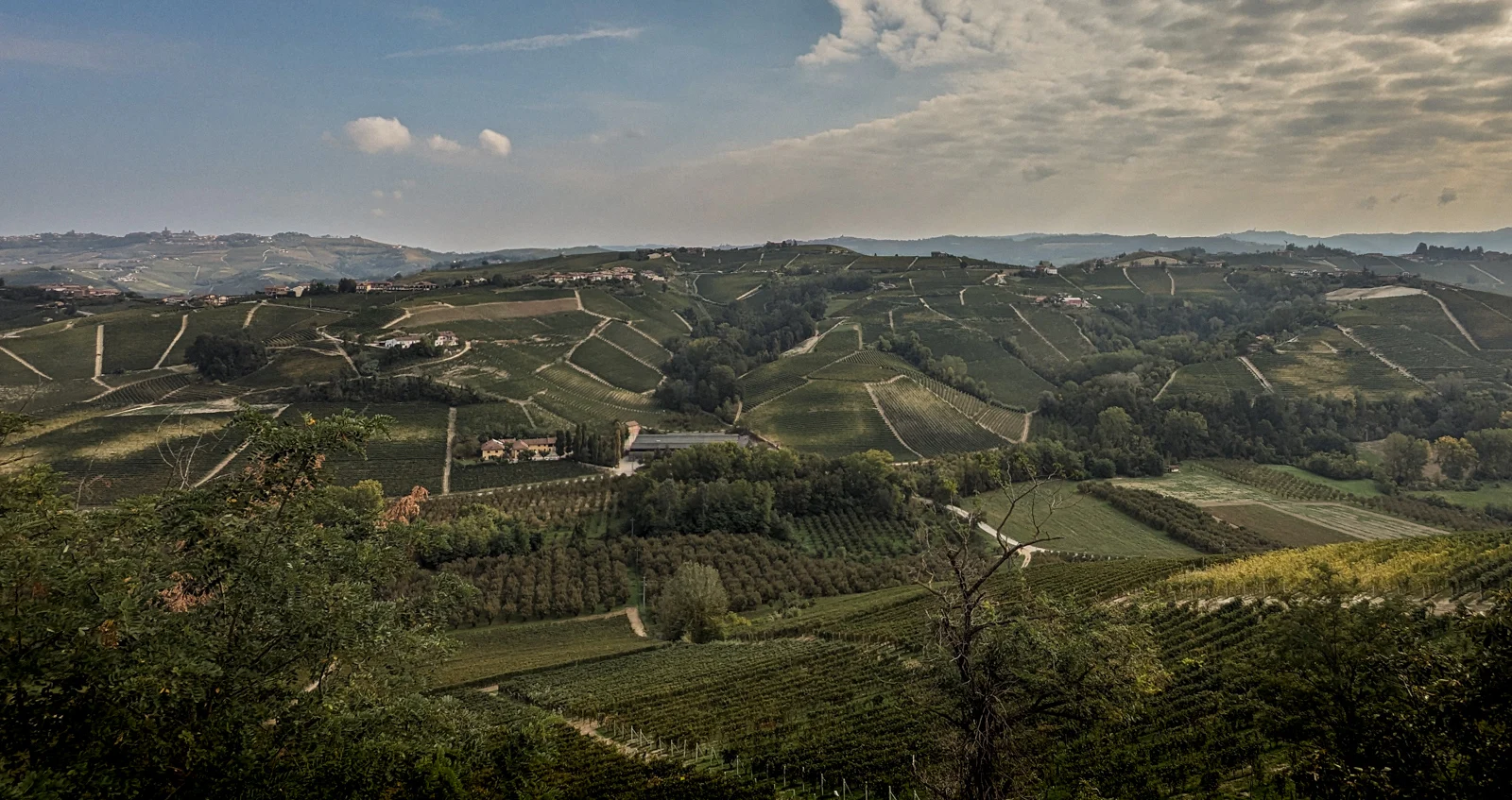
Piedmont rewards that kind of stopping. It’s easy to drive through slowly, photograph from the road, admire from a restaurant terrace. The hills of the Langhe, vines running up every slope, are beautiful enough to make that feel like enough. But the wine is the point, and the wine is complex enough that arriving without context is like walking into the third act of something long and Italian and trying to follow along.
So here’s some context.
Piedmont holds more DOCG appellations than any other Italian region, 19 in all, from the reds of the Langhe to the fizz of Moscato d’Asti. The wines most travelers come for, Barolo and Barbaresco, are both Nebbiolo: high tannin, high acidity, a color closer to garnet than ink, and in youth a severity that can be hard to like. Give a serious Barolo a decade or more and it opens into tar and roses, dried violets, leather.
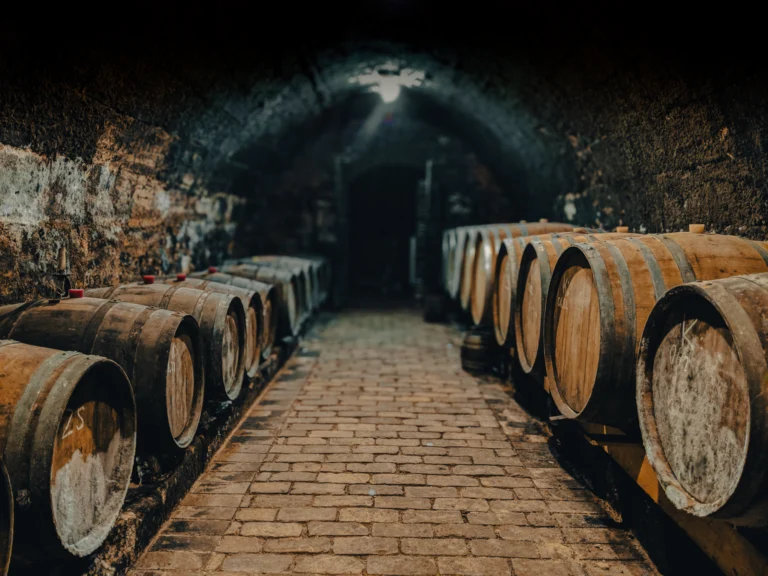
The traditional-versus-modern debate sounds academic until you taste your way through it. Traditionalists favor long maceration, sometimes a month on the skins, and aging in large Slavonian oak casks; the wines can take 15 or 20 years to unwind. The modern camp, which started in the 1980s, cut maceration times and moved to smaller French barriques, making wines you can drink far younger. Neither is wrong; they’re just different things and, as a traveler, it just helps to know which one is in your glass.
Barbaresco, the same grape from villages just northeast of Alba, tends to be a little more elegant, slightly lower in alcohol, with a shorter required aging period. Barolo gets called the king, Barbaresco the queen. It’s a lazy shorthand, but you see where it comes from once you’ve tasted them side by side.
What Piedmont grows beyond Nebbiolo is less famous and often just as interesting. Barbera, from Asti and Alba, is the workhorse: high acid, deep color, good with food, and an underrated value. Dolcetto, whose name means little sweet one and which is not sweet, is darker and softer and made to drink young, the bottle you open on a Tuesday. Then the whites. Gavi, made from Cortese in the southeast, is crisp and mineral and goes with the seafood that turns up on menus more than you’d expect this far inland. Arneis, nearly extinct by the 1970s until Vietti and Bruno Giacosa kept it going, is floral and faintly bitter and works as an aperitivo.
The whites are what visitors tend to skip, and skipping them is a mistake.
Jonas and Andreas didn’t lecture us about any of this. They poured, explained only as much as the wine in front of us needed, then poured something else, and then another. It was the best kind of wine education: accidental, specific, organized around the glass rather than a curriculum.
That’s what a good afternoon in Piedmont feels like, and you can find it well beyond the famous names: beyond the estates in the wine magazines, beyond the producers with waiting lists and allocation systems and the unspoken suggestion that you should have started following them a decade ago.
The Langhe is full of fourth-generation families who aren’t on any list. A gate standing open, a cat, something good on the terrace. They’ll pour you a Barbera while the Barolo opens and talk about the vintage the way people talk about work they’ve spent their lives learning.
Whether you wander in the way we did, or arrive with a guide who has spent years building the relationships that open doors without signs on them, Piedmont gives you more than you came for.
The case arrives every October. I open the first bottle sometime in November, usually with no better reason than to sit down and enjoy the weather. It tastes like that terrace in Annunziata. It tastes like the kind of afternoon you’d have missed if no one had said turn here.