The Piedmont White Wines Visitors Skip
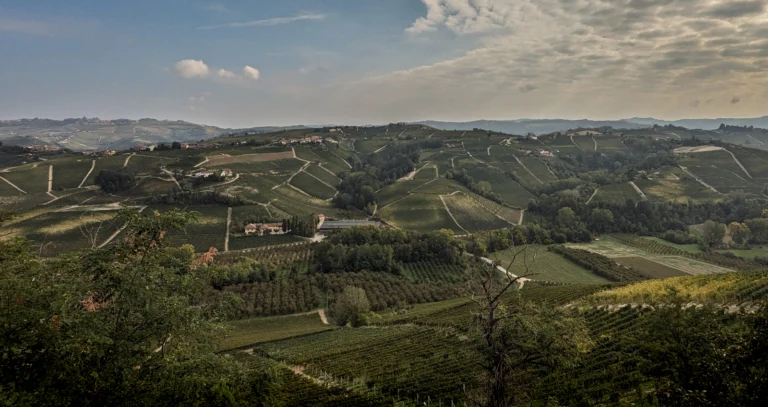
Ask a traveler what they tasted in the Langhe and the answer is almost always Barolo, sometimes Barbaresco, occasionally Barbera if they spent an afternoon with someone who insisted. Almost nobody mentions Gavi. Fewer still mention Arneis. Fewer than that have heard of Timorasso. Arneis grows just across the Tanaro from the hills that produce the reds everyone came for; Gavi comes from the southeast corner of Piedmont that falls toward Liguria, and Timorasso from the same corner a little to the north, in the hills around Tortona. All three spend most tastings sitting unopened while the Nebbiolo gets poured first, last, and twice in between.
Why the Whites Get Skipped
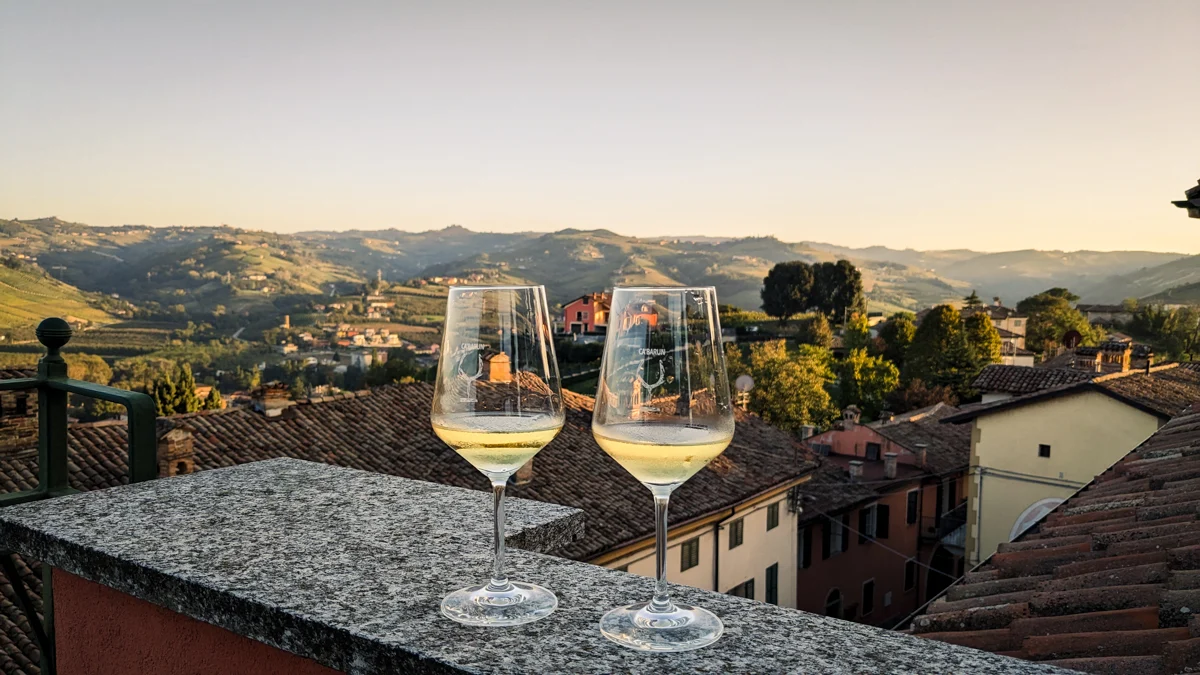
Mostly it comes down to scheduling. Barolo needs years to soften, so a serious tasting walks a guest through vintage after vintage of a wine that’s still years from ready. That takes time and attention, and by the time the flight is finished, whatever white greeted the group on arrival has usually gone warm on a side table, an afterthought to the main event.
Gavi
Gavi, made from Cortese in the hills that climb toward the Ligurian border, needs no cellaring. It’s crisp and faintly saline, built to be finished within a year or two of the vintage, and it belongs with the anchovies and coastal cooking that came up the old salt roads from Liguria more than with Piedmont’s typical meat and truffles.
Arneis
Arneis has a stranger story. By the 1970s it had nearly disappeared, kept alive mostly as a decoy planted among the Nebbiolo to draw birds away from the more valuable fruit. A few growers recognized its value and began planting and vinifying Arneis as a single-varietal wine. It’s floral, faintly bitter on the finish, and works as well before a meal as during one.
Timorasso
Timorasso ages like a red. By the 1980s it had all but vanished, a grape too difficult and too low-yielding to be worth the room it took, pulled up across the Colli Tortonesi in favor of vines that paid their way on the global market. A single grower, Walter Massa, kept faith with it and replanted, and slowly enough others followed to bring it back from a few remaining rows to a small, serious category of its own. Where Gavi is meant for the year after the harvest, a good Timorasso is tight and almost severe when young, then loosens over five or six years into something waxy and honeyed with a hard mineral edge under it. That structure is why the people who care about it call it, only half in jest, the white Barolo. It usually reaches the label as Derthona, the old Roman name for the city of Tortona.
Why Growers Keep Them
All three survive on local logic, with no export market or scoring system behind them. A grower with three hectares of Nebbiolo isn’t going to pull out vines that take a decade to reach their potential for something that sells for less. So the whites tend to come from smaller plots, family holdings, sometimes vines a grower’s grandfather planted for the household rather than the cellar’s main label. Ask about them directly and most producers will pour a taste, unprompted, almost relieved that someone wanted to talk about something other than the red wine they’ve been asked about all day.
Easy to Find, Easy to Miss
Gavi and Arneis carry DOCG status, Timorasso the plainer Colli Tortonesi DOC, and all three sell in wine shops well beyond Piedmont, perfectly findable if a traveler goes looking. They sit at the edge of a region built around red wines with a century of reputation behind them, and a short trip rarely leaves room for anything not already on the list.
Ask the Right Guide
A guide who knows a producer’s full range can pour any of these three without it feeling like a consolation prize.