German Wine Festivals: A Season-by-Season Guide
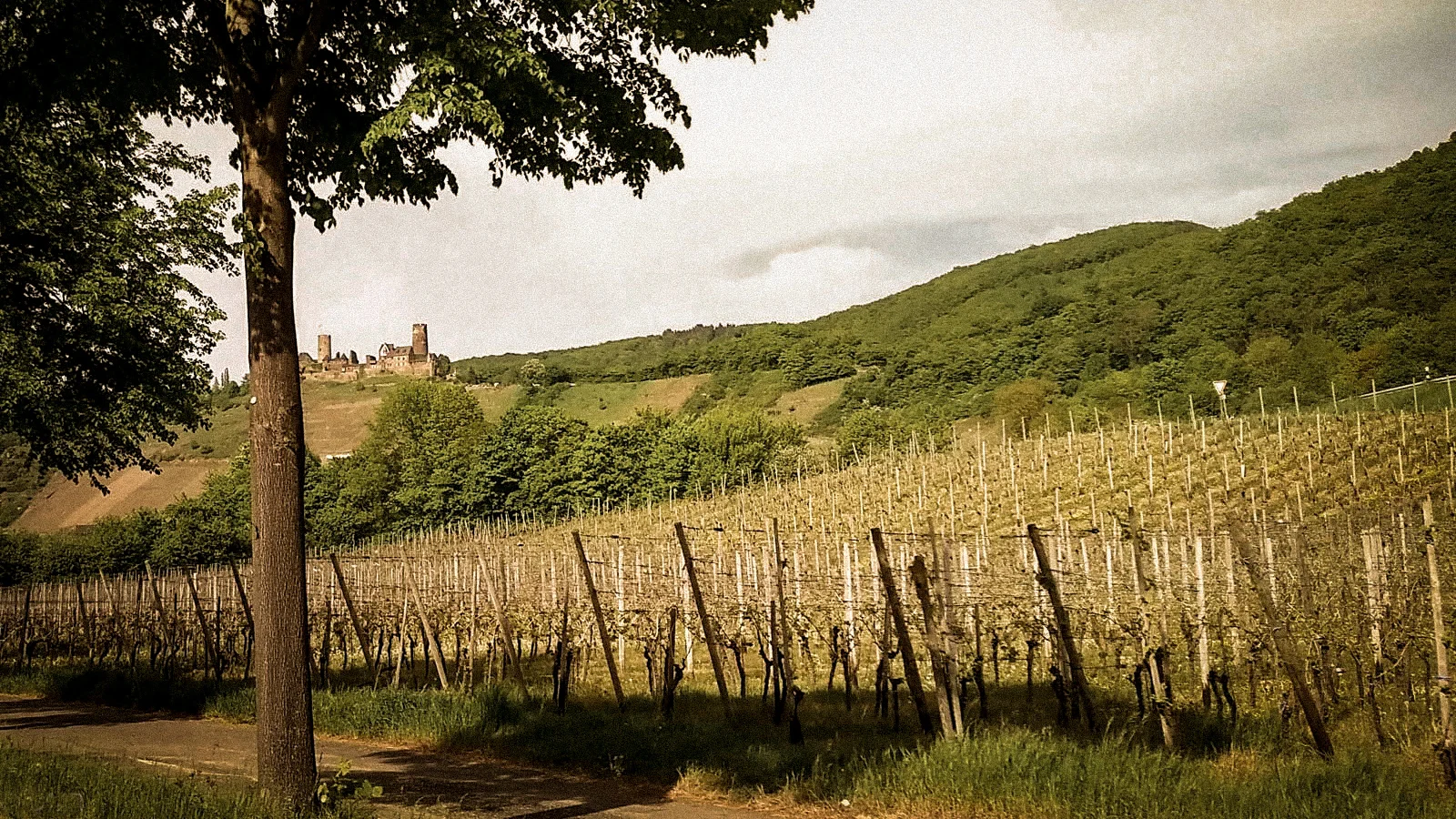
Walk the Bodenheim Weinlehrpfad on an ordinary Tuesday in April and you might think German wine country is a remarkably quiet place. The 2.7-kilometer (1.6 miles) trail winds through the vineyards above the village, signposts identifying the grape varieties growing beside the path, with a view that opens toward Mainz and, on a clear day, reaches all the way toward the Frankfurt skyline. Nobody’s pouring anything. There’s no music, no crowd, no wine queen. It’s simply a hillside doing what Rheinhessen hillsides do, and you’re welcome to walk it any day of the year. This is German wine country in its resting state.
Then June arrives, and for several months each year, Germany’s wine regions wake up for wine festival season. From early June through October, German wine festivals move from village to village and region to region, giving local wineries an excuse to open their doors, pour their wines, and invite everyone in. The festivals aren’t exclusive or hidden, and you don’t need a connection to get through the door – you simply show up.
For a wine traveler, that accessibility is part of the appeal. You get to stand in the middle of a village celebration and become a participant. The wine matters, of course, but so do the food, music, and local traditions. The community and culture surrounding the wine festivals is what brings the whole thing to life.
And that’s what makes German wine festivals worth planning a trip around.
What German Wine Festivals Can (and Can’t) Give You
For travelers, a festival gives you proximity. You can stand at a local producer’s stand, order a glass, talk about wine, and taste what people in the region are drinking. You can move from one producer to another without booking appointments six months in advance.
But it isn’t the same as getting behind the cellar door. The producer you want to visit may not have a stand. And some of the most interesting German wineries might have already allocated their wines to importers, restaurants, or long-standing customers before festival season even begins.
A festival lets you walk into the party, but a private guide can introduce you to somewhere the party isn’t. They’re different kinds of access, but both have their place.
When Is Wine Festival Season in Germany?
German wine festivals generally take place from June through October, following the rhythm of the wine-growing year.
The exact calendar varies by region, but summer and early autumn are the busiest months. Rheinhessen, the Rheingau, Mosel, Baden, Württemberg, the Ahr, and the Palatinate all have their own traditions, from small village celebrations to enormous events that attract hundreds of thousands of visitors.
If you’re planning a wine trip to Germany, festival season is an excellent way to experience a wine region beyond the structured winery visits.
June: St. Albansfest Opens the Season
The season opens in Bodenheim when St. Albansfest fills the festival street below the old fortress wall in early June. Winemakers pour their wines, live bands play throughout the day, local artisans set up shop, and sekt is served in real glasses instead of paper cups. It isn’t staged for tourists. It’s a village turning its tradition into a few days of festival, and visitors can walk in and participate.
From there the season drifts south out of Riesling country and into Baden, where Freiburg spends six days in early July with its Münsterplatz devoted entirely to wine with around 60 regional producers set up beneath the cathedral. Baden’s warmer climate produces a different expression of German wine with Pinot varieties playing an important role alongside regional specialties. Freiburg’s wine festival is as much about the food as the wine. A student discount on the closing afternoon tells you exactly who the town expects to still be standing by then.
August: Germany’s Wine Festival Calendar Gets Crowded
By August, you could spend weeks following German wine festivals.
Wiesbaden runs what it calls the longest wine bar in the world: 10 days, around 100 stands, nearly all of it Rheingau Riesling grown on the steep slopes above the Rhine. The Rheingau Wine Festival is one of the country’s biggest wine celebrations.
The Rheingau is one of Germany’s most important Riesling regions and this is a particularly good festival for travelers who want to taste across multiple producers while getting a sense of how closely wine is woven into the identity of the region.
Farther along the Mosel, Winningen holds the oldest documented Winzerfest in the country, built around the Weinhexbrunnen, a fountain named for a local wine legend. There’s music, wine, and a procession that crowns new wine majesties: the Weinkönigin (Wine Queen) and the Weinhex (Wine Witch), continuing a tradition that has lasted for generations.
Cochem, a little further down the river, keeps its version quieter: a Sunday parade through the old town with a finale of fireworks against the Reichsburg on the hill. Sometimes you don’t need a week-long festival; you just need to arrive in the right village on the right weekend.
Stuttgart, the only major German city with its own municipal wine estate, opens its Weindorf in the last third of the month, and it runs into September. Wine huts in the shadow of the old Rathaus serve local wine varieties Trollinger and Lemberger alongside classic Swabian dishes like Maultaschen and Kässpätzle.
September: Wine Festivals Across the Mosel and Ahr
The first week of September has its own small cluster of festivals, in two directions. On the Mittelmosel, Bernkastel-Kues holds the largest wine festival on the river: Weinfest der Mittelmosel. For several days, visitors move through medieval streets filled with wine stands.
The celebration includes live music, a parade, the crowning of the Mosella (Wine Queen), and fireworks on the closing Saturday.
In the Ahr valley, Bad Neuenahr-Ahrweiler spends its first two weeks of September on its own Weinwochen, built around Spätburgunder rather than Riesling. The Ahr is Germany’s largest contiguous red wine region, and its wine queen goes by Burgundia, a detail that says a lot about how seriously the region takes this grape.
The season peaks in Bad Dürkheim. The Dürkheimer Wurstmarkt is, despite the sausage-related name, one of the world’s greatest wine festivals. Held over two weekends in mid-September, the festival attracts more than 600,000 visitors and is, by attendance, the largest wine festival on earth. More than 35 traditional Schubkarch stands serve wine, continuing a tradition that dates back centuries. The name comes from the carts once used to bring wine casks to the market, and records of the event go back to 1417. The wine, judged and awarded locally every year, is what the town’s been proud of for 600 years.
In late September, Bodenheim brings the story full circle. The Weinlehrpfad, the same vineyard trail you could have walked alone in April, becomes the setting for a wine tasting.
The grape-variety signs that mark the trail the rest of the year become tasting stations with wine poured along the route. The event coincides with the announcement of Bodenheim’s small Top Drei wine competition.
For one Saturday, the trail becomes something like a festival itself. Then, by evening, it becomes a vineyard trail again.
October: Federweißer, Zwiebelkuchen, and One Last Walk
By October the fairgrounds have mostly come down, and what’s left is smaller and more local. Around Bodenheim, the Zwibbelkuchewandertag, links the villages of Bodenheim, Gau-Bischofsheim, Harxheim, Lörzweiler, and Nackenheim along a 20-kilometer (12.5 miles) walking route through their vineyards and old town centers. Visitors find Federweißer and Zwiebelkuchen waiting at stations along the way. Federweißer is the year’s first wine: young, still-fermenting, cloudy, and faintly fizzing. It’s meant to be consumed within days of pressing because it won’t survive a bottle. Zwiebelkuchen, a savory onion tart, is a classic Rheinhessen pairing. There’s no wine queen at the end of this one, no fireworks. Just a stamp card, a slice of tart, a glass of wine that’s barely wine yet, and vineyards preparing for another winter.
—
Festival dates shift from year to year. The ones here were accurate at the time of writing; confirm specifics with each event before building a trip around them.
Keep in Touch
A few times a year, we send notes from the regions: new guides as we add them, and what’s worth planning around next.